

Fantasy Premier League (FPL) has always been a game of numbers, but not all numbers are created equal. Goals, assists, and points per game are the obvious metrics. Value-for-money ratios and attacking scores add nuance. Yet one metric often overlooked in performance analysis is ownership — the percentage of managers who currently hold a player. Ownership is not just a reflection of popularity; it’s a market signal, a measure of herd behaviour, and a risk indicator.
In this blog, we’ll explore how ownership interacts with performance data, using a recent dataset of attacking players across the Premier League. We’ll look at stars like Haaland and Salah, differentials like Fernandes and Doku, and mid-tier picks like Bowen and Enzo. The goal is to show how ownership adds a strategic dimension to raw performance metrics, helping managers make decisions that are not only data-driven but also context-aware.
📊 The Dataset at a Glance
The dataset covers attacking players (element types 3 and 4) with at least 450 minutes played. Each player is profiled with:
- Performance metrics: goals per 90, expected goals (xG90), assists per 90, expected assists (xA90), attacking score, defensive score.
- Value metrics: points per game, total points, cost, value-for-money ratio.
- Labels: “Explosive Attacker,” “Strong Value,” “Poor Value,” etc.
- Ownership: percentage of managers holding the player, plus an ownership label (Highly Owned, Popular Pick, Differential, Ultra Differential).
This combination allows us to see not just who is performing, but how the FPL market is reacting to them.
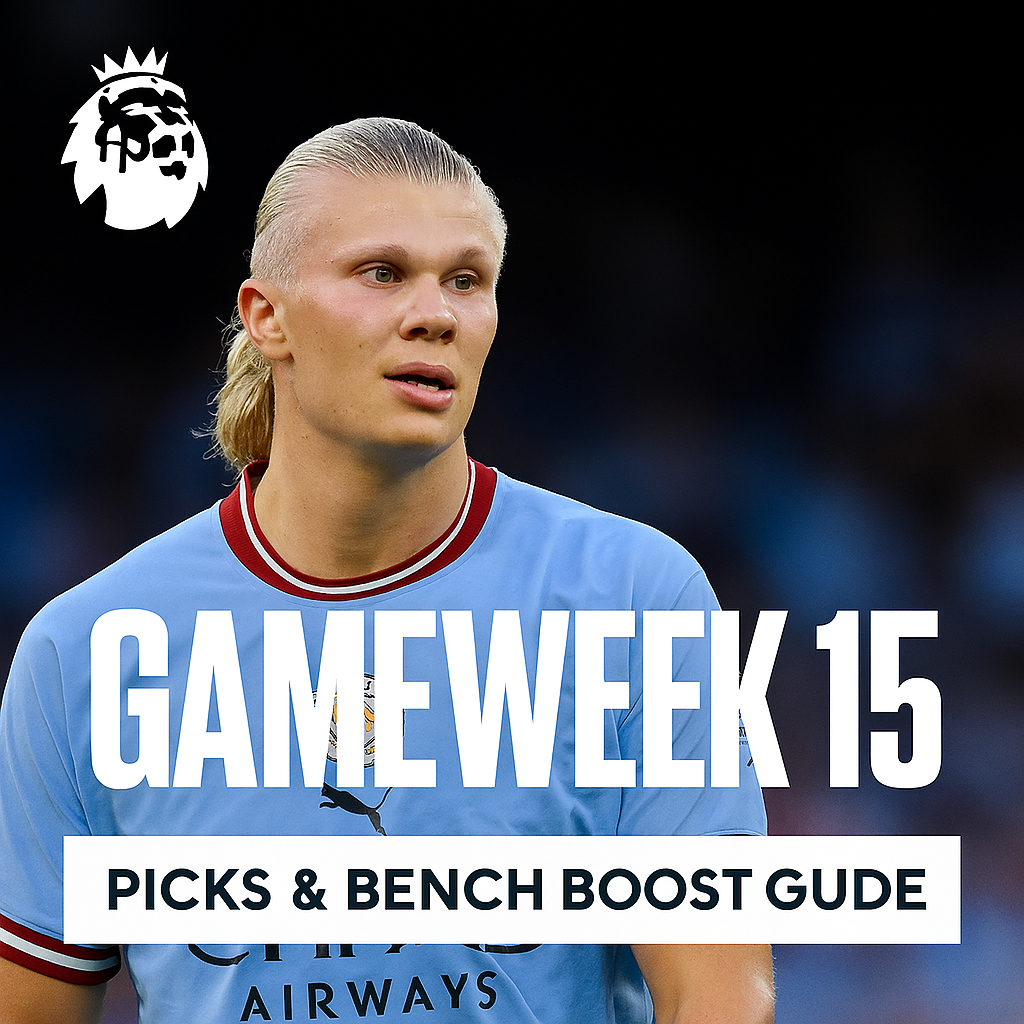
⚡ Haaland: The Highly Owned Benchmark
- Ownership: 70.9% (Highly Owned)
- Performance: 14 goals, 1 assist, 1.33 goals per 90, attacking score 1242.47.
- Value: Average Value (points per game 9.3, but high cost at 14.9m).
Haaland is the definition of a template player. His ownership is so high that not having him is a rank risk. His attacking metrics are elite, but his value-for-money is only “Average.” This illustrates the paradox of highly owned players: they are safe, but they rarely differentiate your team.
From an analytics perspective, Haaland is less about whether he’s a good pick (he is) and more about whether you can afford to go without him. Ownership makes him a compulsory inclusion, even if his efficiency isn’t stellar.
🔥 Salah: Popular but Poor Value
- Ownership: 23.8% (Popular Pick)
- Performance: 4 goals, 2 assists, 0.37 goals per 90, attacking score 1167.
- Value: Poor Value (points per game 4.9 vs cost 14.2m).
Salah’s numbers show why ownership context matters. His attacking score is strong, but his value-for-money is poor. At nearly a quarter of managers owning him, Salah is still a popular pick, but he’s not delivering relative to his price.
This creates a dilemma: managers who own him are protected against his occasional hauls, but those who don’t can redirect funds to stronger value options. Ownership here signals caution — he’s popular enough to hurt you if he explodes, but inefficient enough to justify going without.
🎯 Fernandes: The Differential Playmaker
- Ownership: 16.4% (Differential)
- Performance: 2 goals, 3 assists, 0.18 goals per 90, 0.42 xG90, attacking score 1190.85.
- Value: Average Value.
Fernandes is a fascinating case. His attacking score is high, driven by creative metrics (xA90 0.17, assists per 90 0.28). Yet his ownership is only 16.4%. This makes him a classic differential: a player who can deliver but isn’t widely held.
For managers chasing rank, Fernandes offers upside. His ownership means that when he hauls, only a minority benefit. Ownership transforms him from “Average Value” into a strategic weapon.
🌟 Enzo: Strong Value Differential
- Ownership: 13.8% (Differential)
- Performance: 3 goals, 2 assists, 0.31 goals per 90, xG90 0.47, attacking score 1008.36.
- Value: Strong Value.
Enzo is the kind of player ownership analysis highlights. His attacking metrics are solid, and his value-for-money is labelled “Strong.” Yet his ownership is only 13.8%. This means he’s overlooked despite being efficient.
Managers who spot Enzo early gain a competitive edge. Ownership here signals opportunity: he’s undervalued by the market, but the data suggests he’s a smart inclusion.
🚀 Doku and Gakpo: Ultra Differentials
- Ownership: Doku 5.8%, Gakpo 13%.
- Performance: Both have attacking scores above 1000, with assist-heavy profiles.
- Value: Average Value.
These players are the definition of differentials. Their ownership is low, but their attacking metrics are respectable. They’re risky — minutes and rotation are concerns — but ownership makes them attractive for managers willing to gamble.
Ownership here signals volatility. If they hit, you gain rank. If they blank, the damage is minimal because so few own them.
🏹 Saka: The Mispriced Differential
- Ownership: 17.5% (Differential)
- Performance: 3 goals, 0 assists, 0.40 goals per 90, attacking score 942.52.
- Value: Poor Value.
Saka’s case shows how ownership can mislead. At 17.5% ownership, he’s a differential, but his value-for-money is poor. Managers are holding him based on reputation, not efficiency.
Ownership here signals inertia. He’s popular enough to be noticed, but the data suggests he’s not worth the price. This is where analytics can challenge market sentiment. To be fair, he has missed a few games.
🛠️ Bowen and Grealish: Mid-Tier Differentials
- Ownership: Bowen 7.3%, Grealish 16%.
- Performance: Both have attacking scores above 1000, with balanced goal/assist profiles.
- Value: Average Value.
These players sit in the middle ground. Their ownership is low enough to offer upside, but their value is only average. They’re not bad picks, but they’re not standout either. Ownership here signals optionality: they’re fine if you need them, but not essential.
🧩 Mbeumo: The Popular Value Pick
- Ownership: 33.2% (Popular Pick)
- Performance: 5 goals, 1 assist, 0.47 goals per 90, attacking score 1336.40.
- Value: Average Value.
Mbeumo is a classic mid-priced attacker. His ownership is high enough to make him a template, but not so high as to be compulsory. His attacking score is excellent, but his value-for-money is only average.
Ownership here signals balance. He’s popular because he delivers, but he’s not elite enough to be a must-have. Managers can choose to hold or fade him depending on strategy.
🧠 What Ownership Adds to Analytics
Ownership transforms performance data into strategy. Without ownership, we know who is good. With ownership, we know who is good and how risky it is to ignore them.
- Highly Owned players (Haaland) are compulsory.
- Popular Picks (Salah, Mbeumo) are safe but not always efficient.
- Differentials (Fernandes, Enzo, Doku) are where rank gains are made.
- Poor Value Differentials (Saka) are traps.
Ownership is the missing link between analytics and decision-making. It tells us not just what the numbers say, but how the market is reacting. In FPL, where rank is relative, this context is everything.
📌 Conclusion
Fantasy football is not played in a vacuum. It’s played against millions of other managers, each making decisions based on data, sentiment, and reputation. Ownership is the metric that captures this collective behaviour.
By integrating ownership into performance analytics, we move from descriptive statistics to actionable strategy. We can identify template players, spot undervalued differentials, and avoid popular traps.
The dataset we explored shows this clearly: Haaland is compulsory, Salah is risky, Fernandes is a differential gem, Enzo is undervalued, and Saka is overpriced. Ownership makes these insights sharper, more strategic, and more relevant.
For managers serious about rank gains, ownership is not optional. It’s the lens that turns numbers into decisions, and decisions into outcomes.
Bought to you by Copilot and JAM-IE
Share this content:






Leave a Reply